Live Looping · Tampa, FL
What Is a Live Looping Musician? (And Why You Should Hire One for Your Tampa Wedding or Corporate Event)
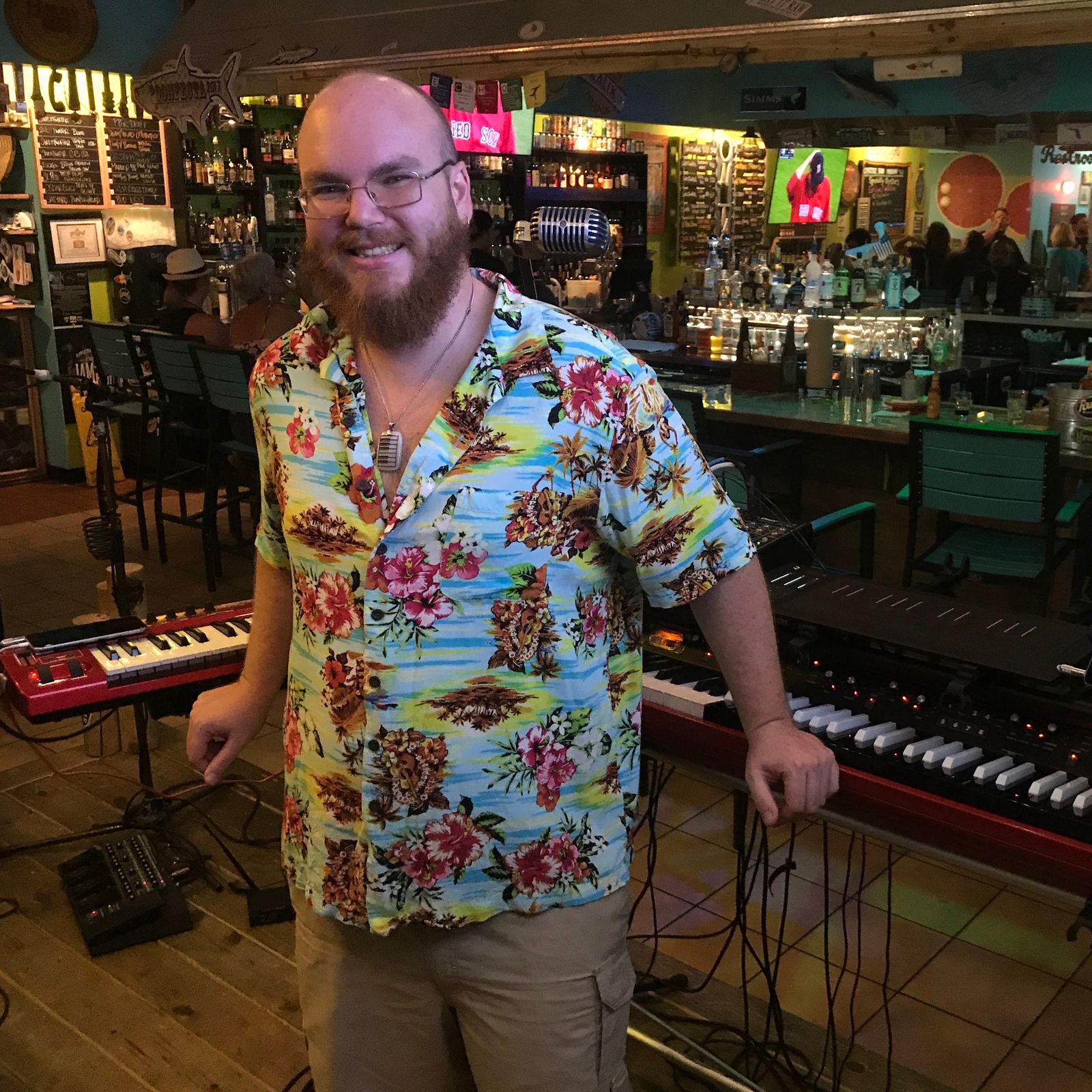
Picture this: one performer walks on stage with a guitar, a keyboard, a microphone, and what looks like a small spaceship at their feet. They tap a pedal, lay down a percussive groove, layer in a bass line, stack a chord progression on the keys, harmonize a vocal pad, and start singing the melody — and within ninety seconds, the room is hearing a full band. One performer, building everything live. Just a musician building the entire arrangement, layer by layer, in real time.
That's live looping: a performance technique where one musician records short audio phrases on a loop pedal — vocals, guitar, keys, percussion, bass — and stacks them live to create the sound of a full ensemble from a single performer. This post covers how it works, why corporate event planners and Tampa wedding couples are increasingly booking live looping musicians over traditional bands and DJs, and the questions to ask before you book one for your event.
How Live Looping Works
A live looping musician builds an arrangement in front of you, bottom-up. The order varies by song, but the layering process usually looks like this:
- Rhythm and percussion. A drum-pad pattern, a stomp-box kick, or a percussive guitar tap lays down the tempo. This is the foundation everything else locks to.
- Bass. A bass line played on guitar (with an octave pedal) or on synth bass — this is what gives the loop weight and makes guests feel the groove.
- Harmony. Chord pads from the keyboard or rhythm guitar, sometimes both. This is where the song's color lives.
- Lead. A guitar riff, piano line, or instrumental hook on top of the harmony.
- Vocals. The lead vocal sits on top, and any vocal harmonies get layered live as well — building a choir effect from one voice.
The hardware that makes this possible is a loop pedal (or, more accurately, a loop station — a multi-track foot-controlled recorder). Modern loop stations have multiple synchronized tracks, undo/redo, dynamic effects, and let the performer change loops on the fly so the arrangement evolves through the song. The audience hears each layer being recorded, then the performer plays on top of the building loop. It's musical performance and live arrangement at the same time.
The result, when it's done well, is something most guests have never seen up close. They expected a singer with a guitar; they got a five-piece band that happens to be one person.
Why Corporate Planners and Couples Are Booking Live Looping
Live looping has moved from novelty to mainstream booking choice across Tampa Bay over the past few years. Here's what's driving it.
One stage, one invoice, one COI, one point of contact
For corporate planners, the logistical math is simple. A six-piece band means six performer fees, a larger stage footprint, longer load-in, longer sound check, and more catering covers. A live looping musician is one performer, one invoice, one certificate of insurance, one W-9, and one point of contact from the day of inquiry through post-event follow-up. When your AV team has thirty other line items to worry about, that consolidation is the whole game.
For weddings, planners and couples coordinate a parade of vendors: florist, catering, photographer, officiant, videographer, lighting, rentals. Cutting the music side down to one contract removes a real source of timeline friction.
Full-band sound at solo-performer pricing
Live bands are great. They're also expensive — often $4,000 to $12,000+ for a polished Tampa Bay reception band, before you add taxes, gratuity, travel, and the surcharge if your venue requires their full PA. A live looping musician delivers a comparable sonic footprint at a fraction of that, because you're paying one performer with one rig instead of five performers with five rigs.
The trade-off is real and worth being honest about: a live band has more on-the-fly improvisational range across players, and a horn section is a horn section. But for most corporate galas and a strong majority of wedding receptions, a single live looping performer covers the same emotional ground for less than half the budget.
Versatile across the entire event arc
A typical wedding moves through four very different musical needs: a quiet ceremony, a cocktail hour that needs ambient warmth, a dinner set that fades into the background, and a reception that needs to actually move the floor. A traditional band can play only the loud parts well; a solo guitarist can play only the quiet parts well. A live looping musician can do both — leading with solo guitar and vocals for the ceremony and cocktail hour, then layering up to full-band textures for the reception. One performer, one setup, one sound check.
Same logic applies to corporate events: cocktail hour, dinner sets, award presentations, and afterparty dance music — all from the same rig.
Interactive QR-code song requests
One feature that's specific to how Chris Flowers Music runs the looping rig: a QR code on the stage front that lets guests browse the 500+ song repertoire and submit live requests from their phones. It turns the audience from passive listeners into an active part of the room. For corporate events especially, that interactive moment becomes a story guests retell at the next year's planning meeting.
Live Looping vs. Live Band vs. DJ
These are different tools for different events. Here's a factual comparison:
| Live Looping Musician | Live Band (5–8 piece) | DJ | |
|---|---|---|---|
| Setup time | 60–90 min | 2–3 hours | 30–60 min |
| Stage footprint | 8×6 ft | 16×12 ft+ | 6×4 ft |
| Music range | Wide — ceremony to dance set | Reception-focused | Anything recorded |
| Per-hour cost (Tampa Bay) | $ — solo-performer | $$ — full-band | $ — single operator |
| Energy level | Wide range, performer-driven | High | High, crowd-driven |
| Live performance feel | Yes — every layer built live | Yes | Recorded |
Bands are the right call when budget and stage space allow and the whole event is dance-floor focused. DJs are the right call when the music range needs to be enormous (think: a bilingual reception with five musical eras across two cultures). Live looping is the right call for almost everything in between — and especially when an event wants live performance energy but only has solo-performer budget.
What to Ask Before You Book a Live Looping Musician
Live looping is more technically demanding than a typical solo gig, so the questions you ask matter. Use this checklist when you're evaluating performers:
- Equipment list. What loop station do they use? What PA do they bring? Are wireless mics included? Do they bring stage lighting?
- Repertoire range. Ask for a song list. A live-looping performer worth booking should have a few hundred songs across multiple eras and genres, not twenty.
- Certificate of insurance. Most Tampa venues require this. Confirm the performer carries general liability and can name your venue as additional insured.
- Backup gear. What happens if a cable fails or the loop station crashes mid-song? Ask about backup pedals, redundant PA channels, and recovery procedure.
- Deposit and contract terms. Standard is 25–50% to hold the date, balance due before the event. Read the cancellation and force-majeure language carefully.
- Sound check requirements. Ask how long sound check takes and whether the venue's PA is sufficient or if the performer will use their own.
- Set length flexibility. Can they extend on the night if the event runs long? What's the per-hour overage?
- PA and lighting included? For solo-performer bookings this is usually yes, but confirm in writing.
- Setlist customization. Will they learn a first-dance song or a corporate brand-anthem if you request it ahead of time?
- Reviews and references. Look for venue references (not just couple reviews) — venues book repeatedly, which is the truest signal of professionalism.
Tampa-Specific Considerations
Tampa Bay has specific realities every booker should know about:
Humidity and weather. Outdoor weddings on Clearwater Beach or rooftop corporate events at Armature Works mean gear has to survive 90° afternoons and salt air. A serious performer will have weatherproofing protocols and a covered-stage requirement in their rider — and they'll have a rain plan. Always ask. Outdoor January weddings are usually fine; outdoor August events need a covered tent for the rig.
Common Tampa Bay venues. Live looping works well at venues across the Tampa Bay venue spectrum — the Vinoy Renaissance and The Don CeSar in St. Petersburg, the JW Marriott Water Street and Armature Works in downtown Tampa, the Sandpearl Resort and Hyatt Regency on Clearwater Beach, the Seminole Hard Rock for corporate galas, the Powel Crosley Estate and Sarasota Yacht Club to the south, and the Ringling Museum for events that want a more historic backdrop. Each venue has its own PA quirks and load-in rules; an experienced Tampa performer will already know them.
Parking and load-in. Downtown Tampa weekend traffic and Ybor City street access matter. Ybor in particular has strict loading-zone windows. A solo performer with one rig has a much easier time of this than a band with two trailers.
Booking lead time. Tampa's wedding peak is October through May (the months that aren't oppressively hot), and Saturdays in those months are the most competitive dates on the calendar. Saturdays in peak season typically book six to twelve months out; weekday corporate dates and December holiday-party slots fill from July onward. If you're planning a 2027 wedding or a December 2026 corporate gala, lock in your date now.
Real Tampa Bay Examples
A few examples from the Chris Flowers Music calendar that show what live looping looks like in practice across event types:
Corporate gala at Seminole Hard Rock. Dinner-set piano through the awards portion, then a ramp-up to full-band live looping for the dance set after the keynote — same performer, same stage, no transition gap.
Wedding reception at a Tampa Bay waterfront venue.Ceremony solo guitar on the dock, cocktail hour piano under string lights, reception live looping with the bridal-party first-dance learned in advance.
The Sunday residency at Gaspar's Grotto. Every Sunday from noon to 4 PM ET in Ybor City, four hours of live looping with guest QR-code song requests — open to the public, no cover. It's the easiest way to actually hear the rig in person before booking.
Ready to Hear It at Your Event?
If you're planning a Tampa Bay corporate event, gala, or wedding and want to hear what live looping sounds like in your specific room, just pick your date at chrisflowersmusic.com/book and see your price instantly.
More on the team and gear: about Chris Flowers. See reviews from past clients, or browse wedding and corporate event service details.
Further reading on live looping as a performance form: Wikipedia: Live looping · The Knot: Live band vs. DJ for your wedding.